3D Marketing Social Media Concept: Visual Power in Design
The 3D Marketing Social Media Concept is a powerful visual design approach that leverages three-dimensional imagery to enhance the impact of digital marketing and social media campaigns. This concept is often brought to life through detailed 3D render illustrations, which can be created and exported in formats like JPG, PNG, PSD, or BLENDER. These files are not just static images; they’re dynamic assets that designers and marketers can manipulate for various applications — from banners and website headers to UI/UX elements and promotional posters.
What Makes 3D Marketing Social Media Concept Unique?
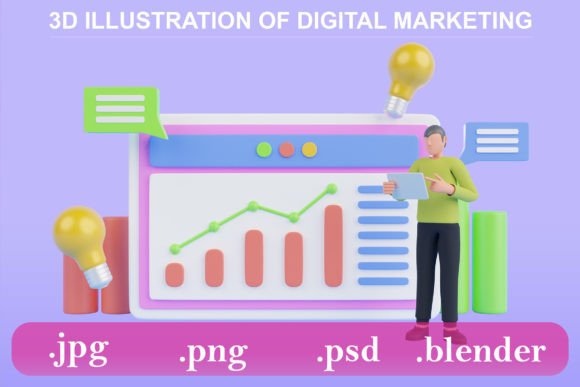
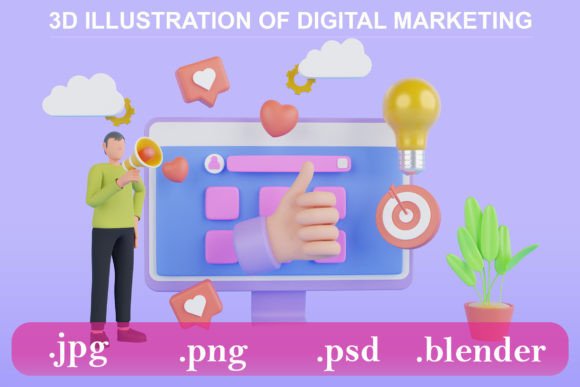
This illustration style brings a sense of realism and modernity to abstract concepts like digital marketing, web analytics, and audience engagement. The use of 3D elements such as floating icons, interconnected data nodes, and stylized characters adds depth and motion to otherwise flat designs. It’s particularly effective for visualizing processes related to attracting target audiences, growing subscriber bases, and promoting content on social networks.
Visually, the 3D Marketing Social Media Concept often features:
- Depth and perspective: Objects appear layered with realistic shadows and lighting.
- Colorful and vibrant textures: Reflecting the energetic nature of online marketing environments.
- Abstract yet intuitive shapes: Representing ideas like user interaction, data flow, and conversion funnels.
- Dynamic compositions: Designed to guide the viewer's eye toward key messages or calls to action.
This style is versatile enough to fit into both minimalist and bold design aesthetics. Whether you're crafting a high-energy Instagram ad or a sleek LinkedIn infographic, the 3D Marketing Social Media Concept helps you stand out by offering a visually rich alternative to standard vector graphics.
Where Can You Use This Illustration Style?
The flexibility of the 3D Marketing Social Media Concept makes it ideal for a wide range of projects. Here are some of the most common and impactful uses:
- Social media banners: Ideal for Facebook, Twitter, or Google Ads where attention-grabbing visuals are key.
- Website headers and landing pages: Creates an immersive experience that communicates innovation and professionalism.
- UI/UX mockups: Helps visualize app interfaces or dashboard layouts in a more engaging way.
- Promotional materials: From email templates to event posters, this concept enhances visual storytelling.
- Editorial and blog design: Adds a creative edge to infographics or lead visuals that explain complex marketing strategies.
- Logo and brand identity work: Offers a unique way to represent digital-first brands with a modern twist.
One of the standout aspects of using a 3D illustration of Digital Marketing is its adaptability across platforms. A single PSD file can be sliced for web use, while a BLENDER file allows for animation possibilities, making your marketing materials even more interactive and shareable.
Design Observations and Recommendations
When working with the 3D Marketing Social Media Concept, consider the context of your message. For instance, if you're focusing on data-driven results, emphasize elements like graphs, metrics, and user profiles. If your campaign is about community building, highlight social interactions and collaborative visuals.
Here are some practical recommendations for maximizing the effectiveness of this style:
- Use sparingly: While 3D visuals are striking, overuse can overwhelm the viewer. Balance them with clean typography and white space.
- Match brand tone: Choose color palettes and character styles that reflect your brand personality — playful, professional, or futuristic.
- Optimize for performance: When exporting for web or mobile, ensure the final image is compressed without losing clarity.
- Test across devices: Ensure your 3D renders look good on desktops, tablets, and smartphones alike.
Typography and Brand Perception
Though the focus here is on illustration, pairing the 3D Marketing Social Media Concept with the right typeface can elevate your design. A modern sans serif font often complements 3D visuals by maintaining legibility and a clean aesthetic. However, depending on your project's needs, a premium font or creative font might also add personality and flair.
Consider how fonts influence brand perception. A bold display font paired with a 3D illustration can convey authority and confidence, perfect for SaaS companies or consulting agencies. On the other hand, a soft script font may help create a more welcoming vibe, useful for lifestyle or educational content creators.
Font pairing is especially important when integrating text into your 3D marketing visuals. Avoid clashing styles — stick to two or three complementary typefaces at most. For example, a strong geometric sans serif could pair well with a rounded handwritten font for a contrast that feels both structured and friendly.
Readability and Hierarchy in 3D Marketing Concepts
Despite their complexity, 3D illustrations must support readability. Text should always be placed where it won’t be obscured by 3D layers or lighting effects. Think of the illustration as a background that enhances — not distracts from — your core message.
Using visual hierarchy techniques ensures that your audience quickly understands what's important. Larger, bolder text with clear separation from the 3D elements will improve comprehension. Additionally, consistent use of colors and shapes across your marketing assets reinforces brand recognition and builds trust with your audience.
A great example is using the same 3D icon set across all social media posts. This consistency helps users identify your content instantly, increasing audience engagement and recall value. Similarly, using the same premium font in both your logo and body copy supports a cohesive brand identity.
Choosing the Right 3D Assets for Your Project
When selecting a 3D render illustration for your next marketing piece, start by evaluating your project’s goals. Are you looking to attract new subscribers? Then prioritize visuals that suggest growth, connection, and movement. Need to promote a product launch? Opt for bold, colorful elements that command attention.
Review the included styles within the design package. Many 3D illustrations come with variations — different color schemes, lighting options, or layout arrangements. These allow you to tailor the asset to specific campaigns or channels without needing custom modeling each time.
Also, consider the format. A BLENDER file gives you full control for animations or modifications, but may require advanced skills. A JPG or PNG is easier to implement and works well for print or static web use. Always test the illustration in context before finalizing your design to ensure it aligns with your message and performs well on the intended platform.
Commercial Licensing and Best Practices
If you plan to use the 3D Marketing Social Media Concept in commercial projects, confirm that the design assets include proper licensing. Some packages offer unlimited usage for personal and commercial purposes, while others restrict redistribution or modification. Understanding these terms avoids legal pitfalls down the line.
Best practices for using 3D marketing illustrations include:
- Respect design credits: Even if the license allows commercial use, giving credit where due maintains industry goodwill.
- Stay updated: Some designers release updated versions of their 3D assets. Keeping up with these ensures your materials stay fresh and relevant.
- Customize wisely: Modify the illustration only when necessary. Over-editing can reduce quality or misrepresent the original intent.
For small business owners or solo entrepreneurs, investing in a high-quality 3D illustration package can significantly boost the perceived professionalism of your marketing efforts. Just remember to treat the asset as part of a larger strategy — not a standalone solution.
Real-World Applications and Examples
Let’s take a real-world example: a digital marketing agency launching a campaign for a client. They use the 3D Marketing Social Media Concept to design a series of Instagram carousel ads showcasing their services. Each slide features a different 3D element — a rising funnel for lead generation, a glowing network of followers for social media growth, and a floating chart showing improved ROI. The result? A visually compelling narrative that clearly explains the value proposition.
Another scenario involves a blogger who wants to make their latest post on SEO trends more engaging. By incorporating a 3D illustration of digital marketing into the header image, they immediately signal the post's relevance to tech-savvy readers. Paired with a clean, readable typeface, the illustration becomes a subtle but effective branding tool.
In packaging design, the 3D Marketing Social Media Concept can be used to showcase products that are themselves digital tools or apps. A box featuring a stylized 3D globe connected to floating icons might hint at global reach or multi-platform functionality — all without words.
Final Thoughts on Integrating 3D Into Your Marketing Toolkit
As the digital landscape becomes increasingly competitive, the need for distinctive, memorable design assets has never been greater. The 3D Marketing Social Media Concept provides a modern, adaptable solution for those looking to stand out without sacrificing clarity or professionalism.
Whether you're a designer creating a suite of social media graphics or a marketer preparing a presentation for stakeholders, this illustration style offers something valuable: a bridge between abstract ideas and tangible visuals. With the right tools and understanding of typeface integration, you can harness its power to craft compelling stories that resonate with your audience.
Explore the potential of 3D in your next project. From web design to packaging design, the right illustration can transform your message into an unforgettable experience.