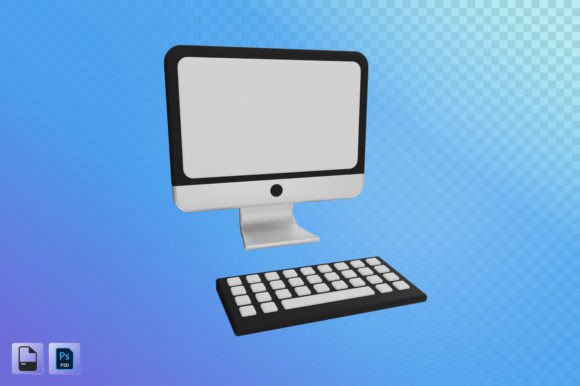
Computer 3D Illustration: A Powerful Tool for Designers and Content Creators
Computer 3D illustration has become a staple in the creative industry, offering designers, developers, and content creators a way to visualize ideas with depth, realism, and flexibility. Whether you're working on an app, website, presentation, or social media campaign, high-quality 3D illustrations can elevate your project from good to exceptional. These digital assets are often delivered in formats like PSD and PNG, at resolutions such as 2000x2000 px, making them ideal for both print and screen-based applications.
Why Use Computer 3D Illustration in UI and Web Design?
In UI and web design, the goal is to create intuitive, engaging interfaces that capture attention and guide user behavior. Traditional 2D graphics can sometimes fall short when it comes to conveying complex concepts or creating immersive experiences. That’s where computer 3D illustration shines.
For example, imagine designing a health app that helps users track their fitness goals. Using 3D illustrations of human anatomy, workout equipment, or progress indicators can make the interface feel more dynamic and informative. These visuals aren’t just eye-catching—they also help users understand the content better, especially when dealing with abstract or technical information.
Web designers use 3D illustrations to add visual interest without relying heavily on photography. This is particularly useful when you need to showcase products that don't exist yet or require customization. With a 3D model, you can easily adjust lighting, angles, and colors to match your brand's identity and the specific needs of the page layout.
Real-World Scenarios in App Development
- E-commerce apps: High-resolution 3D illustrations allow you to display products from every angle, giving customers a realistic view before purchasing. This is especially helpful for fashion, furniture, and tech accessories.
- Education platforms: 3D illustrations can be used to explain scientific processes, architectural structures, or historical events in a visually compelling way that enhances learning.
- Gaming and entertainment: Developers rely on 3D illustration to build characters, environments, and interactive elements that bring their games to life.
- Finance and insurance: Abstract concepts like risk management or investment portfolios can be illustrated using stylized 3D visuals to simplify communication and improve engagement.
Enhancing Presentations and Posters with 3D Visuals
Presentations and posters often need to convey a message quickly and effectively. While text and flat images have their place, adding 3D illustration can transform how your audience perceives your content. The three-dimensional aspect allows for storytelling through layers, perspective, and motion-like effects, even in static formats.
Consider a business pitch deck aimed at investors. A well-crafted 3D illustration showing your product in action or visualizing market growth can make your slides stand out and leave a lasting impression. Similarly, for event posters, 3D artwork adds a sense of grandeur and realism that grabs attention from afar.
One key advantage of using 3D illustrations in these contexts is scalability. Since they’re vector-based or rendered in high resolution, they maintain clarity whether you’re printing a large banner or displaying it on a mobile screen. This makes them incredibly versatile for multi-channel marketing efforts.
How Content Creators Are Leveraging 3D Illustration
Content creators, including bloggers, YouTubers, and Instagram influencers, are increasingly turning to 3D illustration to differentiate their work. In a sea of stock photos and generic graphics, a unique 3D image can help your content break through the noise.
Here’s how 3D illustration benefits content creators:
- Custom branding: Create original 3D icons, logos, or background elements that reflect your brand’s style and values.
- Visual consistency: If you’re producing multiple pieces of content (like videos, blog posts, or infographics), 3D illustrations offer a consistent look across all mediums.
- Engagement boost: 3D visuals tend to catch the eye more than traditional 2D ones, especially when used in animated form or layered compositions.
- Storytelling potential: You can animate 3D illustrations to show transformations, movements, or sequences—making your content more dynamic and memorable.
Take a lifestyle influencer promoting healthy eating habits. Instead of using basic food photos, they might incorporate 3D illustrations of balanced meals or nutrient cycles to present the information in a more digestible and artistic way.
Applying 3D Illustration in Social Media Advertising
Social media platforms thrive on visual content. Users scroll rapidly, so ads must grab attention within seconds. Computer 3D illustration offers a solution by providing bold, colorful, and dimensional graphics that pop right off the feed.
For instance, a new smartwatch launch could feature a 3D render of the device rotating slowly, highlighting its sleek design and features. This kind of ad doesn’t require real-world photography and can be tailored to fit various ad sizes and orientations seamlessly.
Moreover, 3D illustrations allow brands to test different looks and styles quickly. You can tweak the color scheme, materials, or lighting of an illustration in post-production, which isn’t always possible with live-action shots. This adaptability is a major asset in fast-paced digital advertising campaigns.
Industries That Benefit Most from 3D Illustration
While 3D illustration is valuable across many sectors, some industries see significant returns due to the nature of their products and services. Here are a few examples:
- Architecture and Real Estate: Showcase property designs or interior layouts with photorealistic 3D models before construction begins.
- Product Design: Use 3D illustrations to prototype new products, test aesthetics, and communicate with stakeholders without physical samples.
- Medical and Healthcare: Explain procedures, devices, or biological systems with accurate and detailed 3D visuals for professionals and patients alike.
- Marketing and E-commerce: Build trust and excitement with high-quality, customizable 3D product visuals that highlight every detail.
- EdTech and Training: Help learners grasp difficult topics with interactive 3D diagrams and models.
Choosing the Right 3D Illustration for Your Project
When selecting a 3D illustration, consider several factors to ensure it aligns with your goals and works well technically:
- Resolution and file format: Opt for high-resolution files (like 2000x2000 px) and choose between PSD for editable layers or PNG for transparency and simplicity.
- Style and tone: Match the illustration style to your brand's voice—whether it's hyper-realistic, cartoonish, minimalist, or something else entirely.
- Platform compatibility: Make sure the illustration will scale properly and load efficiently on the intended platform, whether it’s a mobile app, a website, or a printed poster.
- Use case: Know if you need a single illustration or a series of related visuals. Some projects benefit from a cohesive 3D art style across all assets.
If you're not a designer yourself, finding the right illustration might seem daunting. But with access to ready-made 3D assets, you can streamline the process. Look for collections that provide both PSD and PNG files, allowing for easy integration into your workflow and future edits if needed.
Strengths and Limitations to Keep in Mind
Like any tool, 3D illustration has its pros and cons. Understanding these can help you decide when to use it and when to stick with other visual methods.
Strengths:
- High level of customization and control over every element of the scene.
- Ability to create visuals for products or scenarios that are impossible to photograph.
- Consistent style across multiple assets, which strengthens brand identity.
- Support for animation, interactivity, and virtual reality integrations.
Potential Limitations:
- Higher production time and cost compared to 2D illustrations, depending on complexity.
- May require specialized software or skills to edit and manipulate effectively.
- Overuse can overwhelm viewers or slow down website/app performance if not optimized correctly.
Despite these challenges, the benefits often outweigh the drawbacks—especially when the final result is a polished, professional graphic that supports your message clearly and creatively.
Getting Started with 3D Illustration for Your Projects
If you're new to 3D illustration but want to incorporate it into your next project, start by identifying where it can add the most value. Maybe you need a striking header image for a landing page, or perhaps you're looking to illustrate a concept in a white paper. Once you've pinpointed the need, search for pre-made 3D illustrations that come in both PSD and PNG formats. This gives you the freedom to edit layers or use transparent backgrounds as required.
Working with 3D illustration doesn’t mean you need to learn complex modeling software. Many platforms offer downloadable assets that are ready to use or can be slightly modified with common design tools. For those who want deeper customization, there are also affordable options to hire freelance artists or collaborate with 3D studios.
Practical Examples Across Different Platforms
Let’s look at a few real-life applications of 3D illustration:
- UI/UX design: A fintech company uses 3D illustrations of graphs and coins to explain financial concepts in a mobile app’s tutorial section.
- Web banners: An online retailer creates a festive holiday banner using 3D gift boxes and snowflakes to enhance the seasonal vibe.
- Infographics: A sustainability blog includes 3D icons of trees, water droplets, and solar panels to represent environmental data in a visually appealing way.
- Poster design: A music festival promotes itself with a vibrant 3D illustration of a stage and crowd, helping attendees visualize the experience.
- Social media ads: A skincare brand showcases a glowing 3D face with animated highlights to demonstrate product effects in a video ad.
These examples show how versatile 3D illustration can be when applied thoughtfully. It’s not just about aesthetics—it’s about enhancing understanding, building emotional connections, and delivering your message with impact.
Final Thoughts on Integrating 3D Illustration
Computer 3D illustration is more than a trend—it's a practical solution for modern design challenges. From UI mockups to social media ads, it provides a way to engage audiences with rich, dimensional visuals that stand out and support your message. When you choose high-resolution 3D illustrations in PSD and PNG formats, you gain flexibility and quality that can adapt to nearly any project requirement.
As you explore the possibilities, keep in mind the balance between creativity and usability. A great 3D illustration should serve your purpose while complementing your overall design. With the right approach and resources, you can harness the power of 3D illustration to bring your ideas to life and connect with your audience in meaningful ways.